Language Learning - The Biggest Mistakes I made
And what they taught me
Introduction
I have tried countless language-learning methods.
Textbooks. Apps. Tutors. Podcasts. YouTube channels. Flashcards. Video games. TV shows. Grammar exercises. Comprehensible input.
Some of them worked better than others.
But the biggest reason I failed to make progress was usually not the method.
It was how inconsistently I used it.
I spent too much time searching for the perfect way to learn and not enough time doing the same useful things every day.
Mistake #1: Studying Without Consistency
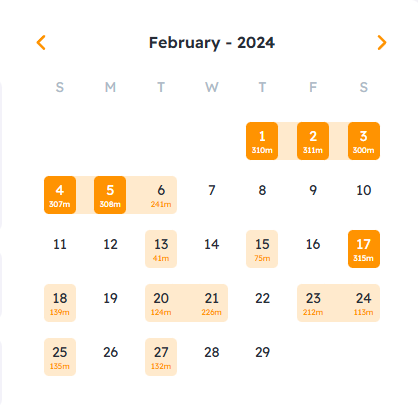
This was easily my biggest mistake.
I would discover a new method, feel highly motivated and follow it intensely for several days. Sometimes even several weeks.
Then life would get busier.
The routine would slowly disappear, and I would start searching for a new system that could supposedly solve the problem.
The problem was not the system.
The problem was that I had stopped using it.
What inconsistency looked like
My learning often followed the same pattern:
- Discover a new resource
- Create an ambitious routine
- Study intensely
- Miss several days
- Feel like the method stopped working
- Replace it with something new
Every restart felt productive because I was making a new plan.
In reality, I was repeatedly returning to the starting line.
A mediocre method used every day will usually beat an excellent method used twice a month.
This became especially obvious with Vietnamese.
Vietnamese was difficult enough that every long break had a visible cost. Vocabulary disappeared, listening became harder and lessons felt like starting over.
The language did not need a more sophisticated system.
It needed regular contact.
What I learned
Consistency does not mean studying for three hours every day.
It means creating a minimum that survives bad days.
That might be:
- Twenty minutes of listening
- One short conversation
- A few pages of reading
- One lesson with a tutor
- Reviewing a small amount of vocabulary
- Watching something you genuinely enjoy
A small session keeps the language alive.
A perfect schedule that collapses after one week does not.
Consistency beats perfect methods.
Mistake #2: Jumping Between Methods and Resources
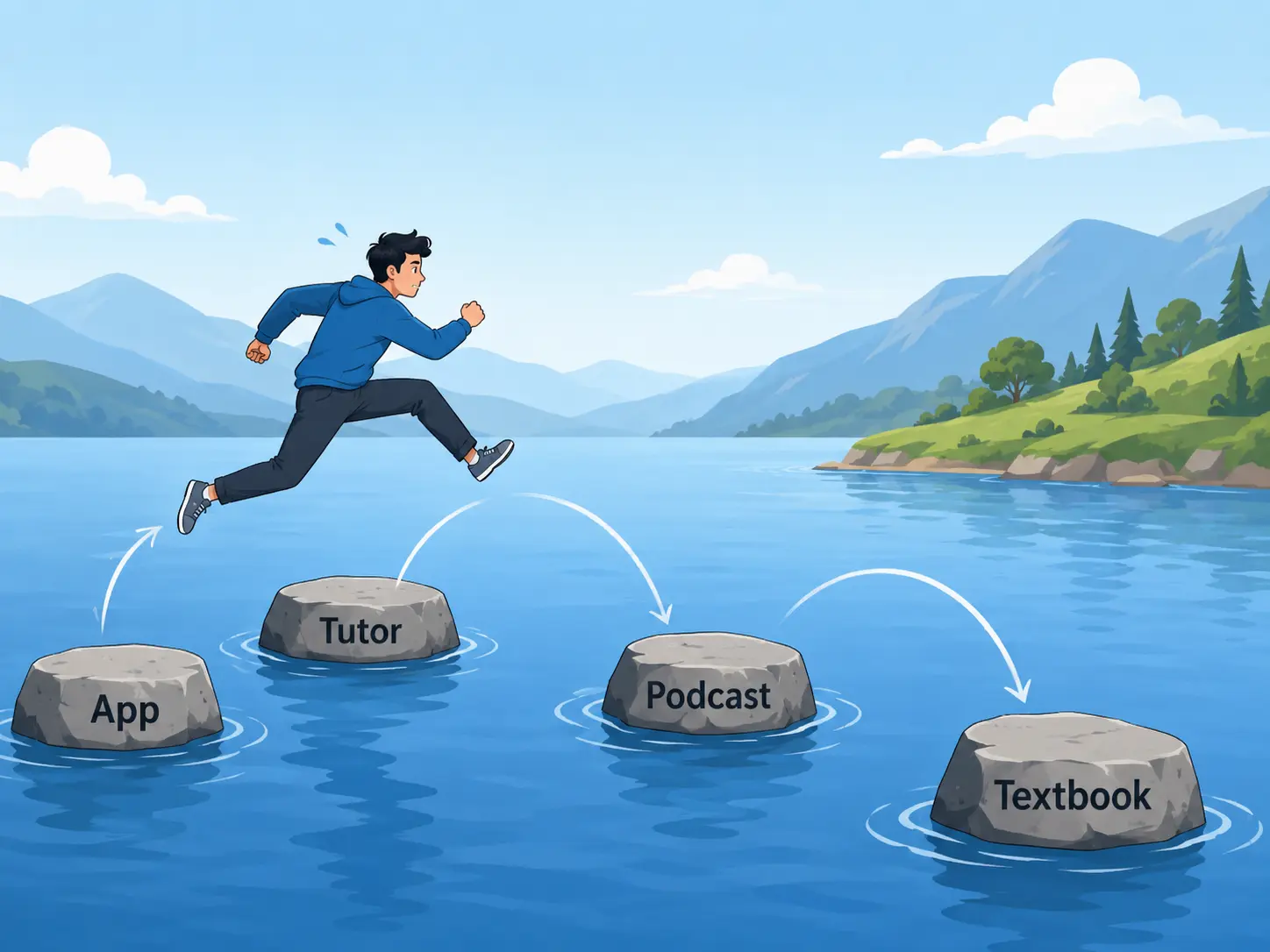
Language learning has an endless supply of resources.
That sounds useful.
It can also become a trap.
Whenever progress felt slow, I started questioning everything:
- Should I use another textbook?
- Is this podcast too difficult?
- Should I study more grammar?
- Should I stop studying grammar completely?
- Is comprehensible input enough?
- Do I need flashcards?
- Should I find another tutor?
- Would a different app be more efficient?
These questions sometimes mattered.
Most of the time, they were procrastination disguised as optimization.
Resource hopping feels productive
Searching for resources gives you a quick feeling of progress.
You compare courses, watch reviews, build schedules and organise bookmarks.
But you are not actually learning the language.
You are preparing to learn it.
There is a huge difference.
Building a better study system became easier than following the system I already had.
I made this mistake across all three languages.
With Spanish, there were always more courses, books and channels to explore.
With Russian, there were endless podcasts, dubbed shows and learning platforms.
With Vietnamese, I often searched for beginner-friendly materials because the resources I already had felt difficult.
But constantly switching made it harder to build momentum.
Every resource has its own structure, vocabulary and difficulty curve. When you abandon it too early, you never reach the point where it becomes familiar.
What I do differently now
I try to give every resource a clear purpose.
Resource –> Purpose
Tutor or course –> Structure and correction
Podcast or YouTube –> Listening practice
Book or textbook –> Reading and organised progression
Video game or series –> Enjoyable immersion
Language exchange –> Real communication
A resource does not need to teach me everything. It only needs to perform its specific job well.
Mistake #3: Avoiding Speaking for Too Long
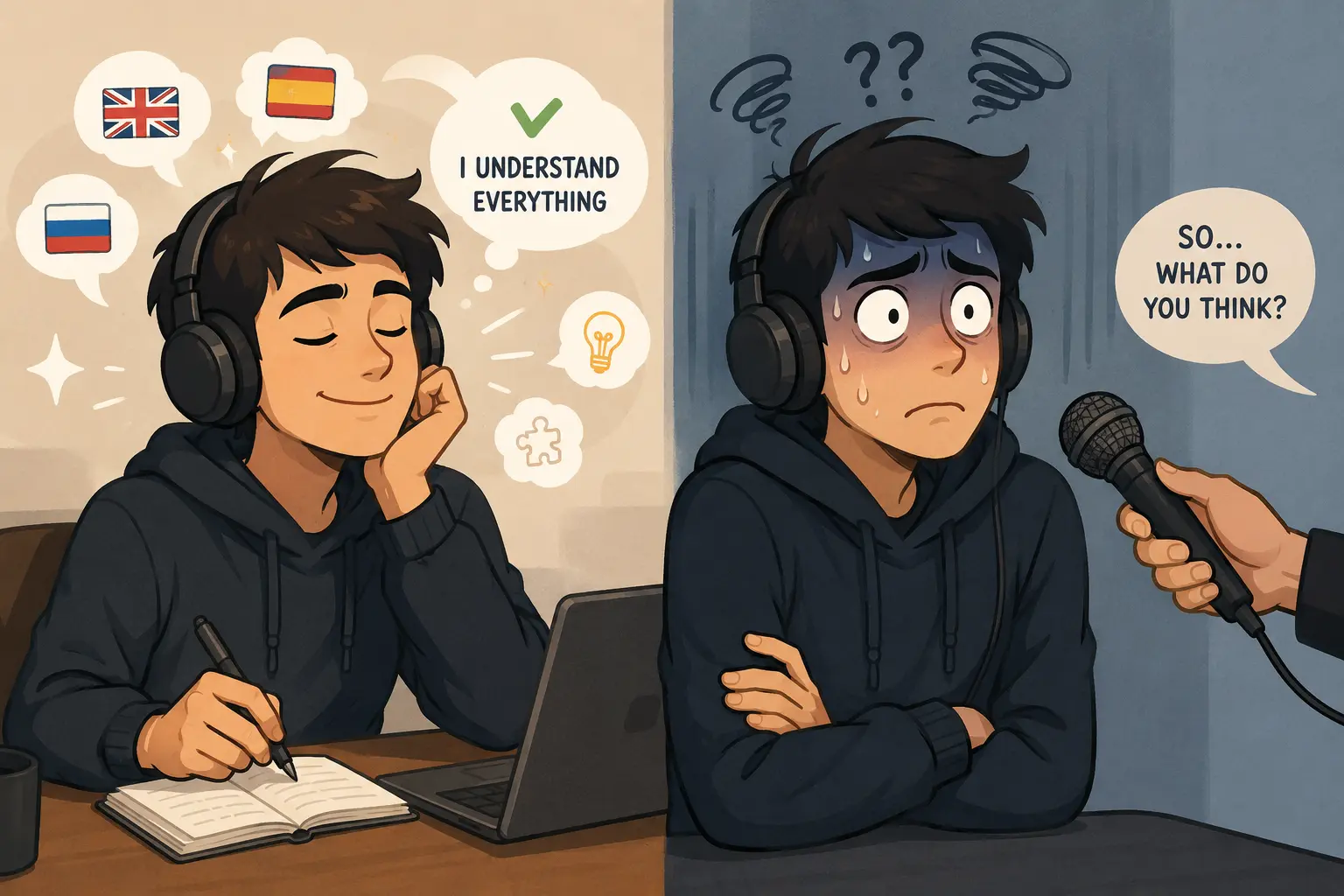
Speaking is uncomfortable.
You understand more than you can say. You forget simple words. Your sentences sound unnatural. You suddenly cannot remember grammar that looked obvious five minutes earlier.
So it becomes tempting to postpone speaking.
You tell yourself:
- I need more vocabulary first.
- I need to improve my listening first.
- I will speak when I reach the next level.
- I am not ready yet.
The problem is that the feeling of being ready rarely arrives.
My Russian exposed this mistake
My Russian listening improved significantly through:
- Podcasts
- YouTube
- Television
- Dubbed series
- Video games
- Repeated exposure
I could understand far more Russian than I could actively produce.
That sounds like a good problem to have, but it revealed a weakness in my approach.
I had trained myself to recognise Russian.
I had not trained myself enough to retrieve and use it.
Understanding a sentence does not mean you can create a similar sentence during a real conversation.
Those are related skills, but they are not identical.
Listening gives you the material. Speaking teaches you how to use it.
Speaking does not need to begin with calls
One reason people avoid speaking is that they imagine the first step must be a long conversation with a stranger.
It does not.
Speaking practice can begin with:
- Reading a paragraph aloud
- Repeating sentences from a podcast
- Recording a short voice message
- Describing what you did today
- Answering simple questions
- Talking to a tutor
- Sending voice messages to a language partner
- Using the language during a game
The first goal is not to sound impressive.
The goal is to make speaking feel normal.
You do not become ready and then start speaking. Speaking is part of how you become ready.
Mistake #4: Translating and Analysing Everything
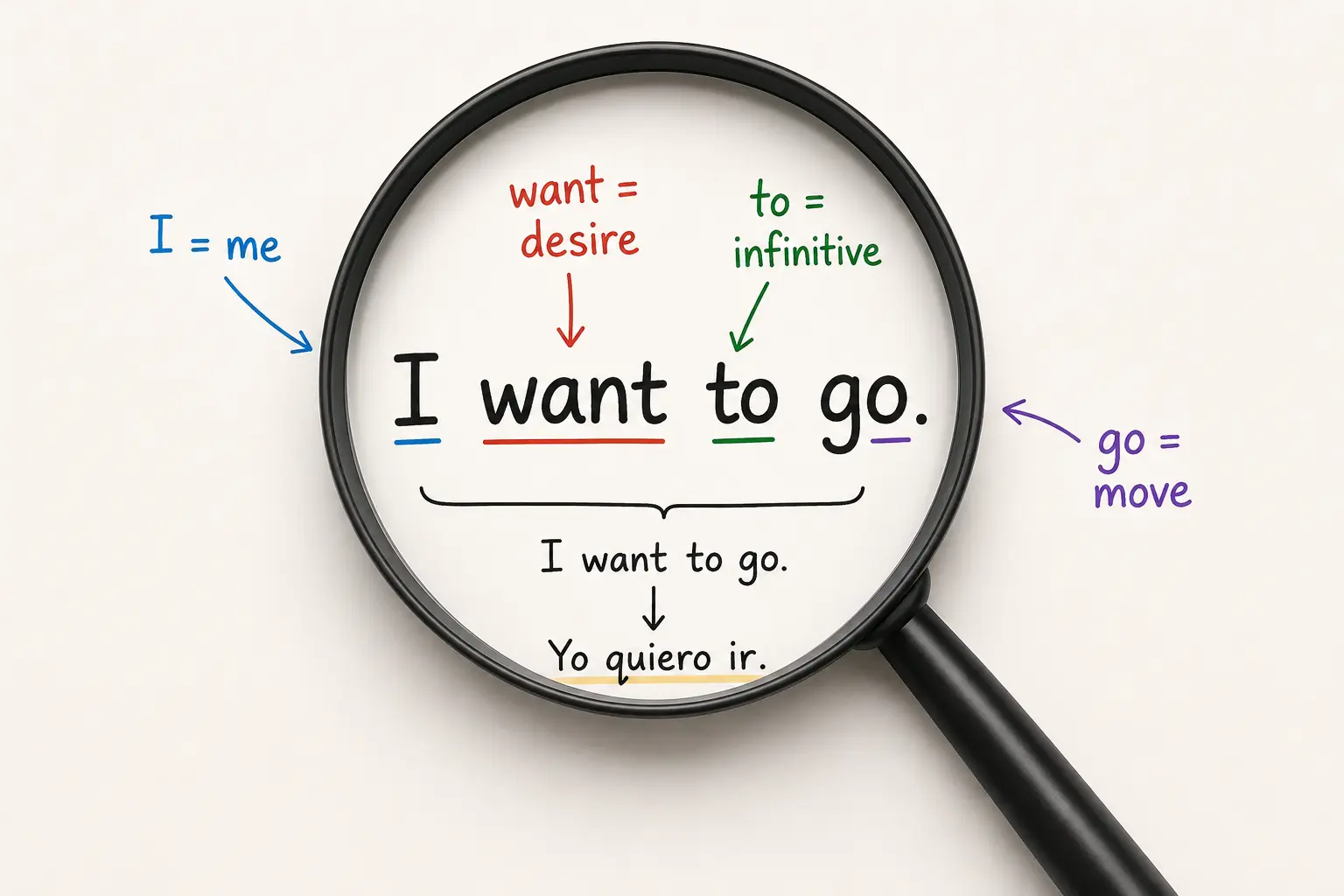
Translation is useful.
Grammar analysis is useful.
The mistake is believing that you must fully understand every word and every sentence before you can continue.
I used to treat confusing sentences like problems that had to be solved immediately.
I would stop, translate individual words, inspect the grammar and search for explanations.
Sometimes this helped.
But doing it constantly destroyed the natural flow of the language.
Understanding the message matters first
When you listen to or read something, there are different levels of understanding.
You might understand:
- Every individual word
- The grammar of the sentence
- The general message
- The speaker’s intention
- What is happening in the story
These levels do not always arrive at the same time.
You can understand what is happening without being able to explain every grammatical structure.
That is normal.
Native speakers also encounter unfamiliar words. They use context, continue reading and gradually build understanding.
Language learners often refuse to give themselves the same freedom.
Not understanding one word does not mean you failed to understand the sentence.
Vietnamese made overanalysis especially dangerous
Vietnamese initially felt extremely unfamiliar.
The pronunciation, tones, sentence patterns and vocabulary were far removed from the European languages I already knew.
Because of that, I wanted certainty.
I wanted to know exactly why every word was used and exactly how every sentence worked.
But if I analysed everything, even a short piece of content became exhausting.
The solution was not to abandon translation completely.
It was to use it selectively.
My current rule
I stop and investigate something when:
- It appears repeatedly
- It seems important to the message
- I am completely lost
- I want to use it myself
- The same structure continues confusing me
I usually continue when:
- The meaning is already clear
- The word appears unimportant
- I can guess it from context
- Stopping would ruin an enjoyable activity
- I am practising general listening rather than detailed study
What Finally Started Working
My current approach is not based on one universal method.
Each language needs something slightly different.
 Spanish
Spanish improved through a large amount of natural exposure and real use:
- Series and videos
- Gaming
- Discord
- Voice communication
- Conversations
- Content I genuinely enjoyed
At a higher level, Spanish became less about studying the language and more about living part of my life through it.
 Russian
Russian benefits heavily from comprehensible input:
- Long-form podcasts
- Dubbed series
- Games such as Gothic
- Repeated vocabulary
- Regular listening
But input alone left a gap between comprehension and speaking.
The next step is not finding more Russian content.
It is combining that content with gradual output.
 Vietnamese
Vietnamese needs more structure because it is still at a lower level:
- Regular tutoring
- University lessons
- Beginner material
- Repetition
- Short daily contact
- Small practical conversations
Trying to learn Vietnamese only through advanced native content would be inefficient.
Trying to learn it only through textbooks would be boring and incomplete.
The answer is a combination of structure and meaningful exposure.
Different languages may need different tools, but all of them need consistency.
What I Would Tell My Past Self
Stop rebuilding your routine every time you have a bad week.
You do not need another complicated system.
Choose a few useful activities:
- Something you can understand
- Something you enjoy
- Something that forces you to produce the language
- Something you can repeat consistently
Then continue long enough to see whether it works.
Do not evaluate a method after three enthusiastic days.
Evaluate it after several months of honest use.